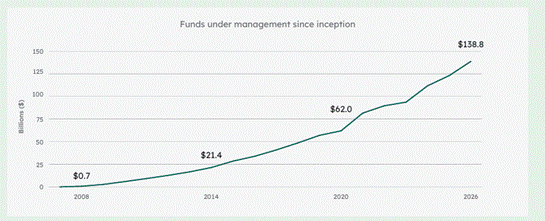
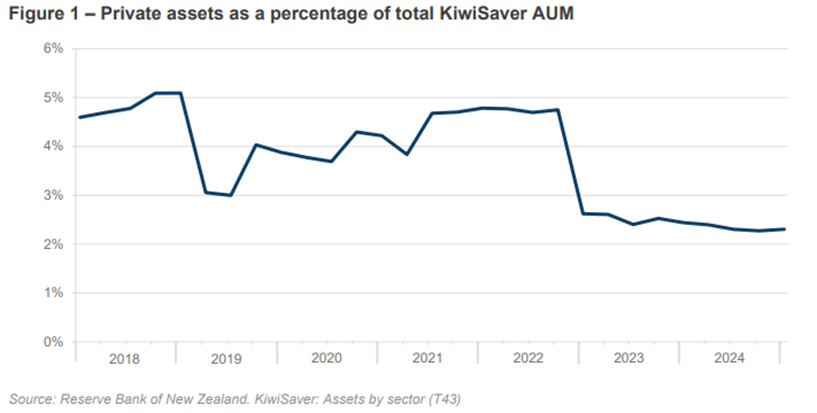
This is the third post in a short series on private markets in KiwiSaver. The first covered the FMA’s report on private assets in managed funds and what it tells us about where providers and the regulator are heading. The second looked behind the headline KiwiSaver funds under management numbers to see where member money is actually flowing.
I also cover the FMA’s 2026 KiwiSaver Annual Report.
This post deals with the practical question that follows: if allocations to alternatives within KiwiSaver are going to grow, what needs to be in place for that to happen well? Valuation, governance, diversification and liquidity management all have a part to play. However, side pockets, an idea that has attracted a good deal of attention, are not a necessary condition for that growth.
What is a side pocket?
A side pocket separates an illiquid or hard-to-value asset from the rest of a fund.
There are really two different uses of the term, and it matters which one is being discussed:
- an event-driven side pocket, used when an asset that was expected to be liquid suddenly becomes untradeable, such as Russian securities after sanctions followed Russia’s invasion of Ukraine in 2022.
- a structural sleeve, where a fund deliberately holds private assets and needs a standing mechanism for members who want to leave before those assets can be sold.
This post focuses on the second use, the structural sleeve.
Take a KiwiSaver fund with 95 percent in listed shares, bonds and cash and 5 percent in an unlisted private asset. A member wants to transfer out.
With a side pocket, the member receives their share of the 95 percent now and keeps an entitlement to the 5 percent unlisted asset. The manager sells the unlisted asset in due course and pays the proceeds to the pocket holders. The main fund never has to find that cash.
Without a side pocket, the member receives 100 percent in cash, which the manager raises either by selling the unlisted asset or by selling liquid assets. Selling the liquid assets risks leaving remaining members with a larger share of the illiquid asset.
The key issue is the ability of the manager to manage the fund’s redemption requests.
What a side pocket changes are the pressures on the manager to turn that asset into cash, and how easily the manager can handle member cash flows in the other 95 percent.
The argument for side pockets is that without one there is the risk that a wave of redemptions forces either a distressed sale of the unlisted asset or the sale of liquid assets, leaving remaining members holding a larger share of the illiquid asset.
The case usually made for side pockets in KiwiSaver rests on portability. Members can move to another provider, generally within ten working days, so a fund holding illiquid assets may need to find cash quickly. I do not think that is a binding constraint. Liquidity management, diversification, and a sound valuation policy are what matter.
Providers in more mature markets manage unlisted allocations alongside member switching by sizing those allocations, pacing commitments and holding liquid assets against expected flows. KiwiSaver providers can do the same.
The case for, and against
In favour of side pockets: they give a manager time to sell an illiquid asset properly rather than being forced into a distressed sale to fund an exit, and they stop remaining members ending up holding a larger share of the illiquid asset than before, simply because liquid assets were the only thing available to sell quickly.
Against them: they do not create liquidity; they separate the illiquid asset from the rest of the fund. The illiquid asset still has to be valued, monitored and eventually sold. Operationally, they add cost and complexity, with separate units, separate reporting and difficult questions around transfers and hardship withdrawals. Most importantly, they do not address the reason the illiquidity became a problem in the first place.
What international experience shows
Side pockets are used structurally in hedge funds and other open-ended alternative funds, where professional investors accept lock-ups and agree the terms up front.
I am not aware of them being used as a standing sleeve within mainstream retirement funds. In regulated funds in the UK, EU and India, their recognised use has been exceptional and reactive, after assets became untradeable, distressed or unreliable to value. The UK Financial Conduct Authority’s regime, for example, exists because sanctions made certain Russian-linked assets untradeable. Meanwhile, retirement funds overseas, Australian superannuation funds among them, have built sizeable unlisted allocations, as far as I am aware, without relying on side pockets.
The idea that KiwiSaver needs side pockets to increase private asset investment is not evident in international experience.
A split industry
MBIE’s December 2024 discussion document proposed amending the KiwiSaver Act to let providers use tools such as side pockets while still meeting portability requirements. Submissions were far from united.
Some submitters opposed side pockets. One warned that their availability could encourage less disciplined management of problem assets, and another argued that individual assets are better managed within a fund’s wider liquidity. Others supported them, preferring side pockets to the alternative of suspending redemptions (an extreme outcome). A few were cautious or raised other concerns.
What the FMA is actually focused on
The FMA’s attention is on something else. Its April 2026 report on private assets in managed funds, covered earlier in this series, flagged valuation practices, review frequency, governance, conflicts of interest and investor communication as the areas requiring attention as allocations grow.
The FMA’s April 2024 liquidity risk management guide lists side pockets among available tools and says managers should not rely solely on such tools.
Is KiwiSaver genuinely constrained without side pockets?
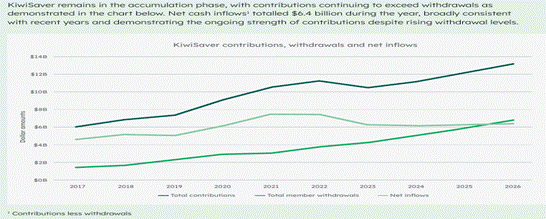
KiwiSaver contributions are regular, and for most providers they exceed the amounts leaving the fund in a typical year. Scheme transfers, although large, are set against a backdrop of net contributions. See my earlier post, Beyond the headlines.
Most members cannot access their savings on demand: access is generally limited to permitted categories such as retirement, first-home purchase, significant financial hardship and serious illness.
The exception is the right to transfer to another provider. The portability rule is the basis of the argument for side pockets.
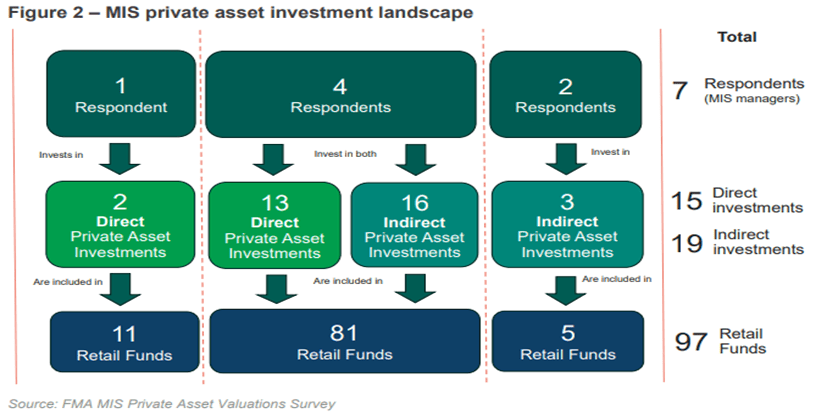
The FMA’s survey found most KiwiSaver providers plan to increase their private asset allocations over the next three years. The intention is there. The question is what needs to be in place.
Could side pockets limit allocations to alternatives?
A side pocket also creates a practical problem.
A manager running a diversified unlisted allocation across private equity, infrastructure, private debt and property holds many assets with different valuation dates, capital calls and distribution patterns.
Ring-fencing them in side pockets means separate units, records and valuations, and it disrupts the commitment pacing the manager relies on. Capital calls on a pocketed commitment still have to be met, and distributions no longer flow back into the main fund to finance new commitments.
With a standing side pocket, every departing member would also wait for part of their balance in normal conditions, not just in a crisis.
That leads to an irony. A mechanism proposed to encourage private assets could end up limiting them. Members can switch providers, and a provider that pays out in full and promptly is more attractive than one that holds part of the balance back.
Used routinely, a side pocket could cap allocations to alternatives, not grow them.
Single-strategy fund versus multi-asset fund
A distinction is worth making here. The case for side pockets rests on the image of a wave of redemptions creating the pressure. That image is far more plausible in a concentrated, single-strategy vehicle (a dedicated property or mortgage fund) than in a diversified KiwiSaver fund, where the illiquid sleeve is typically a modest part of a much broader portfolio.
In a single-strategy fund, the illiquid holding is essentially the whole redemption risk. In a diversified fund, members redeeming or switching en masse are usually responding to something else entirely: poor relative performance, high fees, or a governance or reputational problem.
None of this means KiwiSaver carries no liquidity risk. A fund can still be tested for reasons that have nothing to do with its illiquid holdings.
A well-run provider still has to size unlisted allocations using cash-flow forecasting, allocation limits and commitment pacing, so that it can be sustained without assuming every holding is redeemable at short notice.
That points to a fair question: if an unlisted allocation is only workable because a departing member might be left holding an illiquid residual interest, was the allocation appropriately sized for that fund in the first place?
The role of diversification
The first fundamental is diversification within the unlisted allocation itself.
Concentration risk sits quietly inside a lot of unlisted asset conversations. A fund that spreads a modest unlisted allocation across several asset types, such as infrastructure, private debt, private equity and property, and across a reasonable number of individual holdings within each, is far better placed to absorb a single asset or sector-wide shock than one that builds a large position in one manager, one asset type, or one specific project.
An asset-class failure, or the failure of one large individual holding, can move fund values in a way that a side pocket does nothing to prevent.
Diversification does not eliminate illiquidity, but it reduces the odds that illiquidity and a material loss of value arrive in the same asset at the same time, which is when the fairness between members is most at risk.
Advanced liquidity management
Diversification needs to be paired with proper liquidity management, and that means modelling, not guessing.
The established institutional practice, used by large pension plans and endowments, is a liquidity budget: projecting expected fund flows (contributions, withdrawals, and, in KiwiSaver’s case, transfers between providers), against modelled market returns, and stress testing that projection rather than relying on the central case alone.
Stochastic modelling, running the fund through thousands of simulated paths for both cash flows and returns, is the usual tool among large institutions. It can also be used to plan private equity commitment schedules against expected capital calls and distributions.
That modelling should then set the fund’s liquidity tiers: how much sits in daily-traded listed assets, how much in monthly or quarterly redemption vehicles, and how much can genuinely be committed to multi-year private equity or infrastructure lock-ups without compromising the fund’s ability to meet ordinary redemptions and transfers.
Layering liquidity terms this way, sometimes called a liquidity ladder, does a different job to asset diversification. Diversification reduces the odds of a single asset or sector dragging down the portfolio. Liquidity tiering reduces the risk that a fund is forced to sell the wrong asset at the wrong time purely because it has to.
Ultimately, this is the analysis that should determine a fund’s appropriate allocation to alternatives and private markets in the first place, not a target set in isolation and defended after the fact.
It is worth asking whether that rigour would actually get built if the default position were simply to rely on a side pocket. A standing side pocket gives a fund somewhere to put a mistake. A liquidity budget and a properly stress-tested modelling process force the mistake to be avoided before it happens.
A KiwiSaver fund could still face a mismatch between its unlisted allocation and its transfer obligations, particularly if the allocation was poorly sized. That is an argument for getting the sizing, diversification, valuation and liquidity management right, not for a side pocket.
A robust valuation policy
In addition to diversification and a liquidity management framework, a robust valuation policy is essential.
Valuation is where the FMA has been most specific. Its April 2026 report found most providers follow international standards, use independent valuers and have strong governance frameworks.
It also found a lack of formal provision for out-of-cycle valuations, and that some providers have limited insight into the inputs used by external valuers.
The FMA does not prescribe a valuation framework, but a sound policy would likely include:
- an independent valuation of each unlisted holding at least annually
- formal quarterly valuations
- monthly desktop reviews between those dates, updating for cash flows, market movements and known events
- defined triggers for an out-of-cycle valuation, such as a sharp move in listed comparables, a significant event at the asset or the sale of a similar asset, with a set process and timeframe for revaluing and, where needed, adjusting the unit price
- a valuation committee independent of the portfolio managers, with extra scrutiny of related-party assets
- access to the valuer’s inputs and methodology, not just the number
- back-testing of marks against actual sale prices, and a clear policy for correcting unit pricing errors
- plain disclosure to members of how, and how often, unlisted assets are valued
Valuation cannot make an asset liquid. It can make sure members transact at a fair price whenever they move. A side pocket does nothing to fix a weak valuation process. It only changes where the weakness shows up.
Governance
Governance ties this together. An independent investment committee should approve the limits on unlisted allocations, the liquidity policy and the valuation policy. The supervisor should be satisfied the framework works in practice, and conflicts, particularly related-party holdings, should be managed in the open. The FMA has flagged conflicts and oversight as areas needing attention.
Which side of the pocket am I on?
Side pockets are neither necessary nor sufficient for growing alternatives within KiwiSaver, and that growth should not rely on them.
In regulated funds, side pockets have mostly been associated with distressed or impaired assets. The UK’s Financial Conduct Authority regime, for example, exists because sanctions made certain Russian-linked assets untradeable, not because UK retail funds decided in advance to hold structurally illiquid assets.
Making a side pocket a standard feature of KiwiSaver would normalise a tool designed for exceptional circumstances and risk it being treated as a substitute for getting the fundamentals right.
Those fundamentals are the same ones the FMA is already focused on: sound investment decisions, appropriate liquidity management, robust and independent valuation policies, and good governance. Get that right, along with appropriate diversification, and a side pocket becomes something a fund rarely if ever needs. Get them wrong, and a side pocket does not fix the underlying problem, it simply determines who is left holding it.
Conclusion
Portability is routinely treated as the binding constraint that makes side pocketing necessary. However, a scheme that sizes its private allocation to its own contribution and transfer patterns will unlikely be tested it in practice.
Side pockets, an exceptional tool in regulated funds overseas, should not become the default answer. A standing side pocket makes it too easy to skip the rigorous liquidity modelling that should be setting the allocation in the first place, which is reason enough on its own to keep it as a last resort rather than a starting assumption.
Ironically, the tool promoted to unlock alternatives could end up limiting them. The added complexity works against the goal of encouraging private asset investments.
The industry’s energy is better spent on the fundamentals: sound investment decisions, disciplined liquidity modelling, valuation policies, governance, and genuine diversification across unlisted asset types and individual holdings, so that concentration risk in any one asset or asset class does not become a fund-wide problem.
Get that right, and most of the argument for side pockets falls away on its own.
Remember, diversify your diversifiers.
Happy investing.
Disclosure
Please read the Kiwi Investor Blog Disclosure Statement before relying on any information in this post. This blog is written for information and discussion purposes only. Nothing in this post constitutes financial advice. All investment strategies involve risk, including the loss of principal. Readers should seek independent financial advice before making any investment decisions. The views expressed in this post are my own and do not represent the views of my employer or any organisation with which I am affiliated.
Global Investment Ideas from New Zealand. Building more Robust Investment Portfolios.